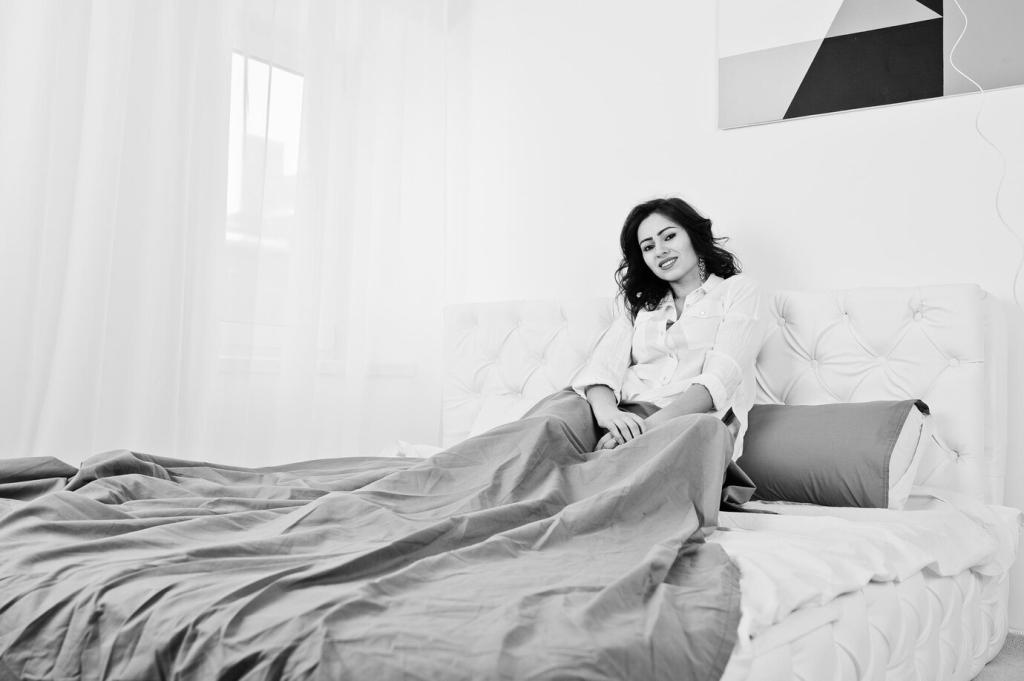
Minimalist Sleep Environment Design: Rest Starts With Less
Chosen theme: Minimalist Sleep Environment Design. Create a bedroom that quiets the mind, softens the senses, and welcomes deep, unbroken sleep. We’ll show you how fewer objects, gentler materials, and mindful layout make rest feel inevitable. Share your questions as you read and subscribe for weekly minimalist sleep ideas.
A clear nightstand signals your brain that the day is over. Visual clutter taxes working memory, nudging cortisol upward and sleep downward. Keep only water, a soft lamp, and one meaningful item that earns its place every night.
The Quiet Power of Less
Limit your palette to quiet neutrals and gentle contrasts. Off-white walls, sandy textiles, and graphite accents soften edges and reduce stimulation. Texture does the talking: woven linen, matte ceramics, and oak grain whisper calm without demanding attention.
Light Design That Honors Circadian Rhythm
Darkness That Truly Restores
Layer blackout shades with light-filtering drapery to catch leaks from edges. Cover piercing indicator LEDs with discreet dim stickers. Even tiny light from chargers can fragment sleep; guard your darkness like a precious nightly ritual.
Replace harsh overheads with 2700K bulbs and dimmable bedside lamps. Aim lights toward walls for gentle bounce instead of glare. Warm pools of light signal melatonin release, making reading feel cozy and your pillow feel inevitably inviting.
Schedule shades to rise gradually or try a sunrise alarm that brightens over thirty minutes. Morning light anchors your circadian clock, helping you fall asleep earlier. Share your wake-up routine and how morning brightness reshaped your energy.
A wool rug, heavy curtains, and an upholstered headboard absorb echoes that make bedrooms feel restless. Even a simple tapestry opposite the bed can soften reflections. These tactile choices feel luxurious while quietly lowering perceived noise levels.
Acoustic Comfort Without Gadget Overload
Seal gaps under doors with a low-profile sweep and add felt pads to drawers. Aim for below 30 decibels at bedtime if possible. Use a simple, steady fan for masking only when the building or street refuses to cooperate.
Air, Temperature, and Scent for Deep Rest
Cool, Breathable Bedding
Keep the room around 60–67°F if comfortable, and choose linen or crisp percale cotton for airflow. Avoid heat-trapping layers that force midnight kicks. A lighter duvet with a breathable cover often outperforms bulky, impressive-looking alternatives.
Center the bed so both sides are equally accessible, and avoid door swings grazing corners. A simple, low-profile frame emphasizes horizontal calm. Leave generous clearance at the foot to prevent nightly shuffle and subconscious tension.
Linen breathes and softens with time, while percale cotton stays cool and crisp. Thread count hype often misleads; weave and fiber quality matter more. Select natural tones that patina gracefully rather than chasing showroom perfection.
02
Seasonal Layers Without Bulk
Use a lightweight duvet for most months, then add a thin wool blanket when temperatures dip. Layering keeps you responsive to nightly changes. This approach avoids sweaty wakeups and lets the bed look serene, not puffy.
03
Care Rituals That Preserve Calm
Wash sheets weekly and duvet covers every two to three weeks to reduce allergens. Sun-dry when possible for a fresh, quiet scent. Share your low-effort laundry rhythm that keeps the bed feeling hotel-clean without cluttering your routine.